The content on this website is published in English. I cannot guarantee the quality of the translated text generated by the plugin of this website. The machine-translated “names” and “terminology” are often inconsistent and/or incorrect. If it looks confusing, please switch back to the English version.


Disclaimer: Information such as the locations or the trails shown on the maps of this website might be inaccurate, misleading or out-of-date. They are only the simple illustration for the ranges of the hiking trails or the points of interest. Please prepare your own navigation device, apps, topo maps, and GPX files for hiking.
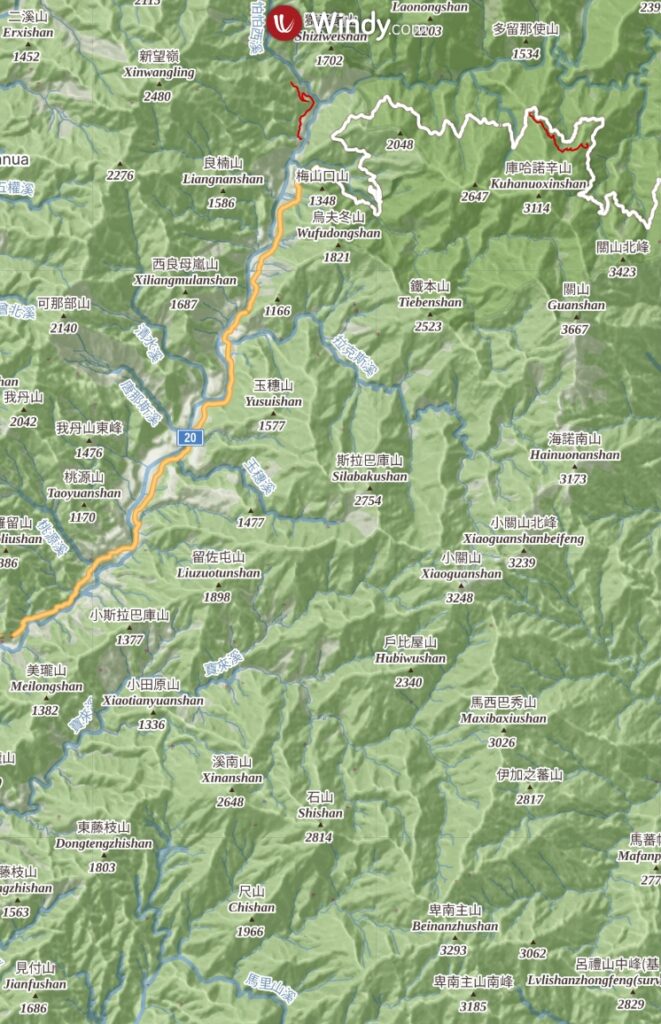
About South Section 1
The Difficulty Rating: ★★★★★
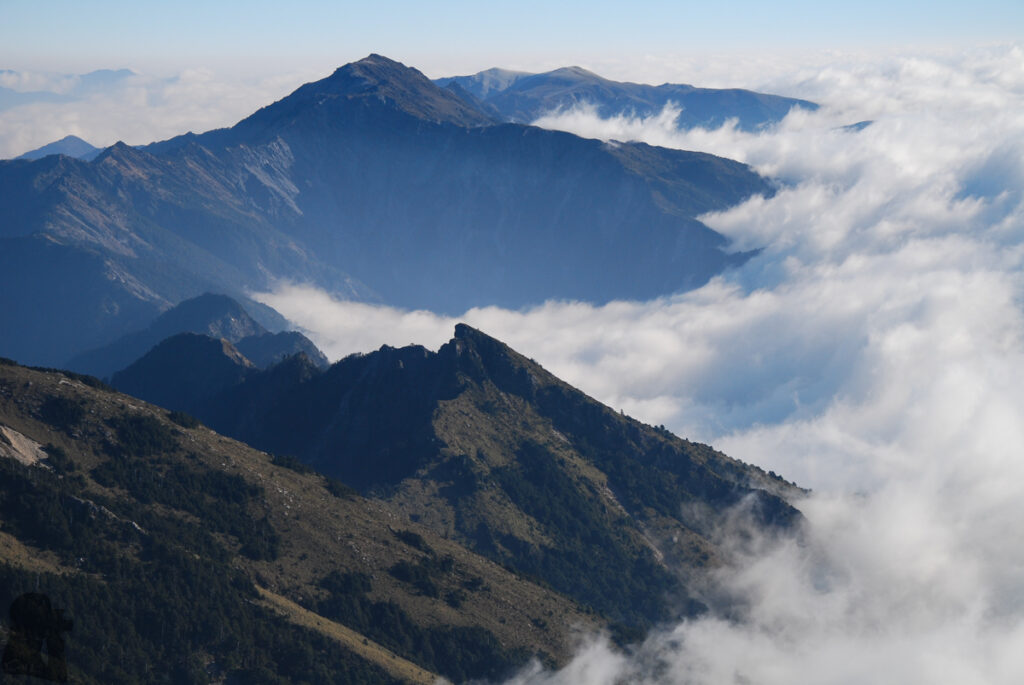
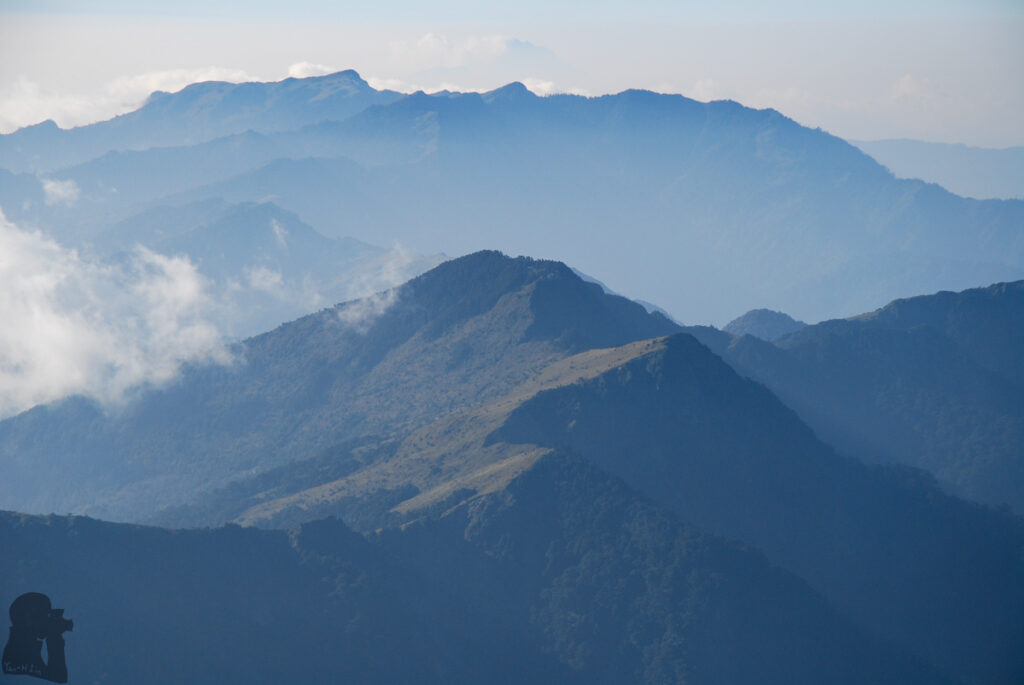
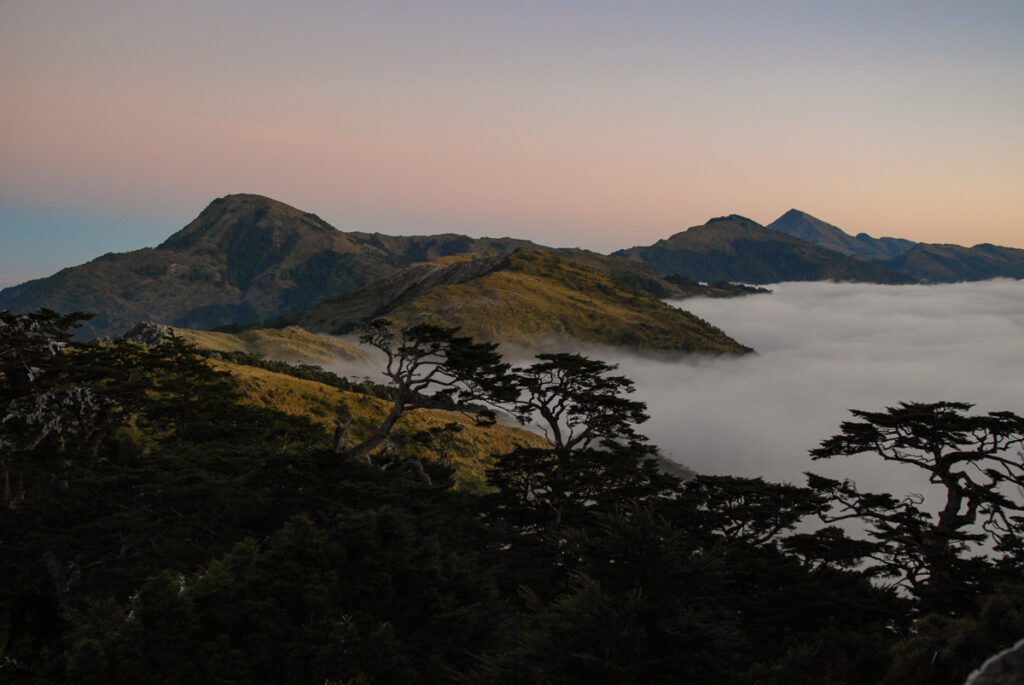
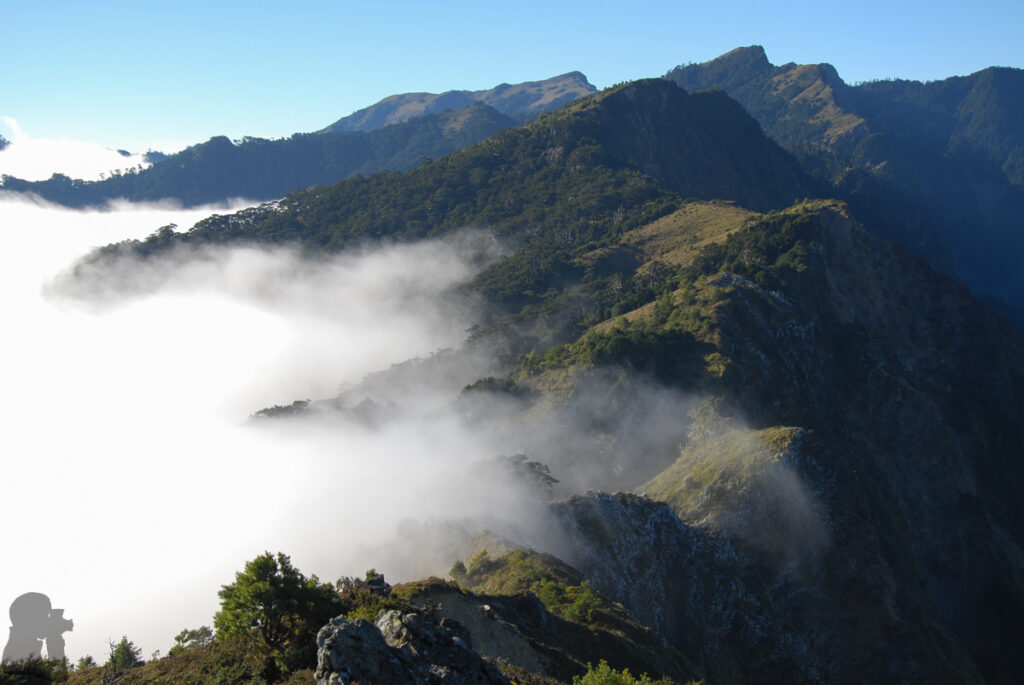
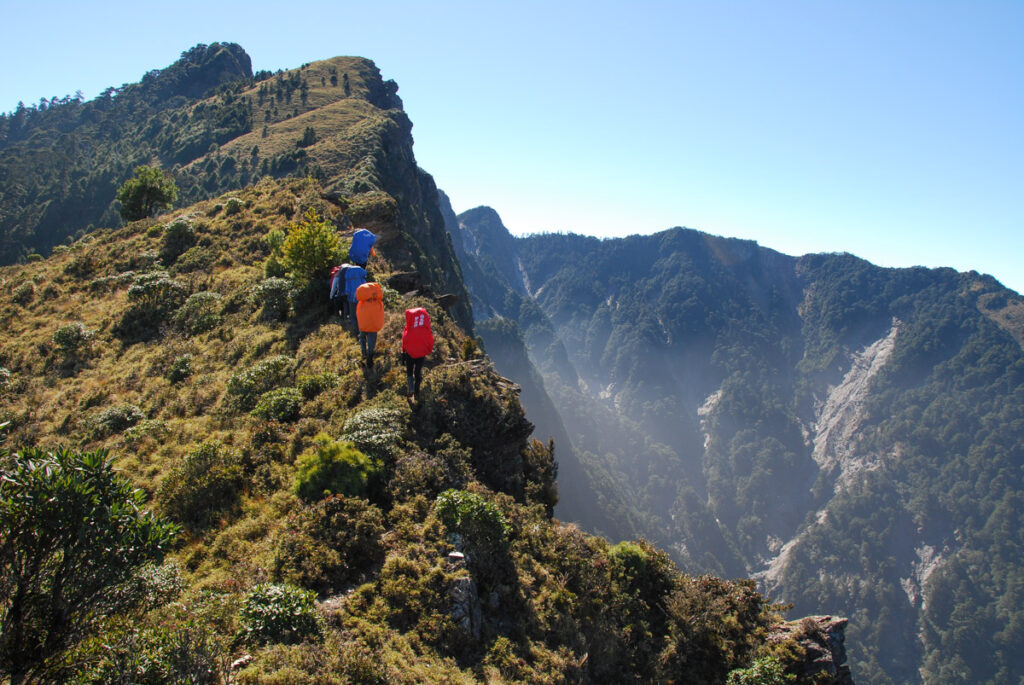
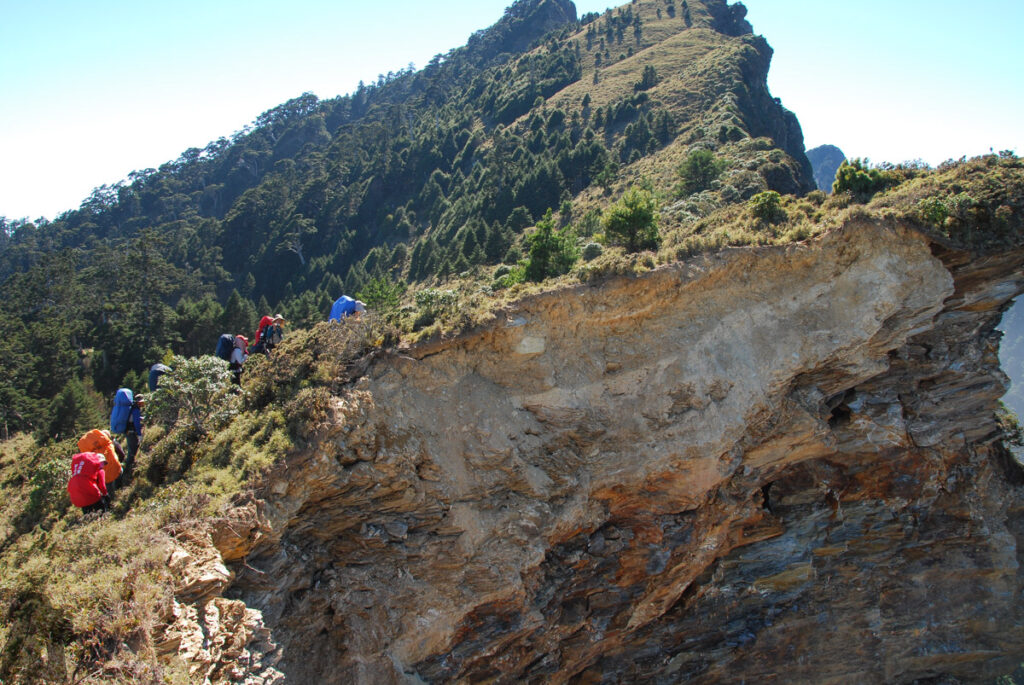
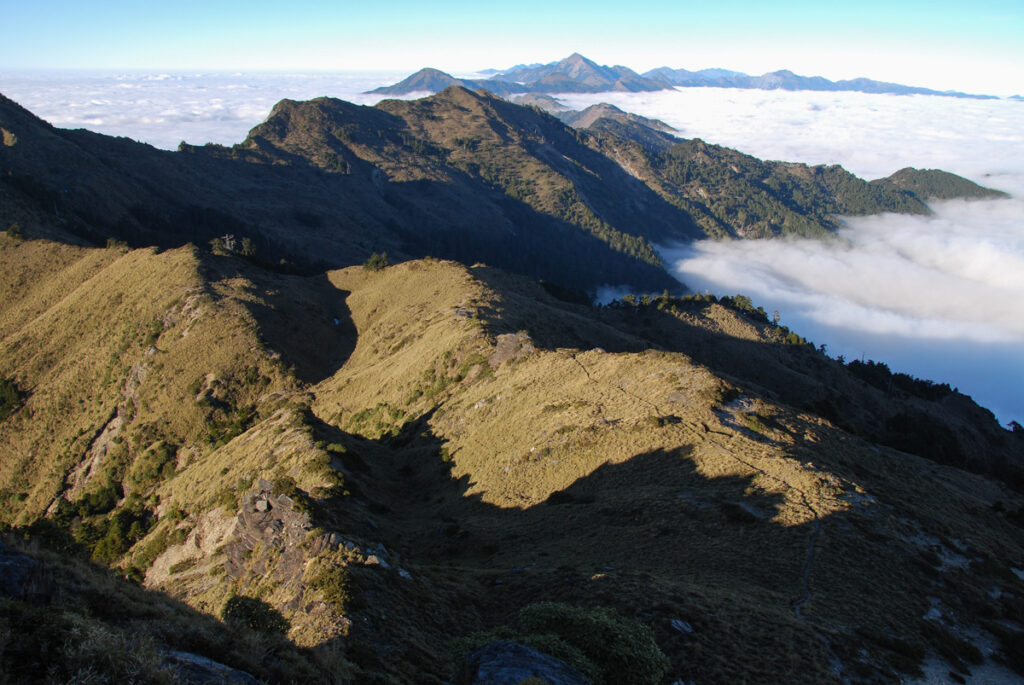
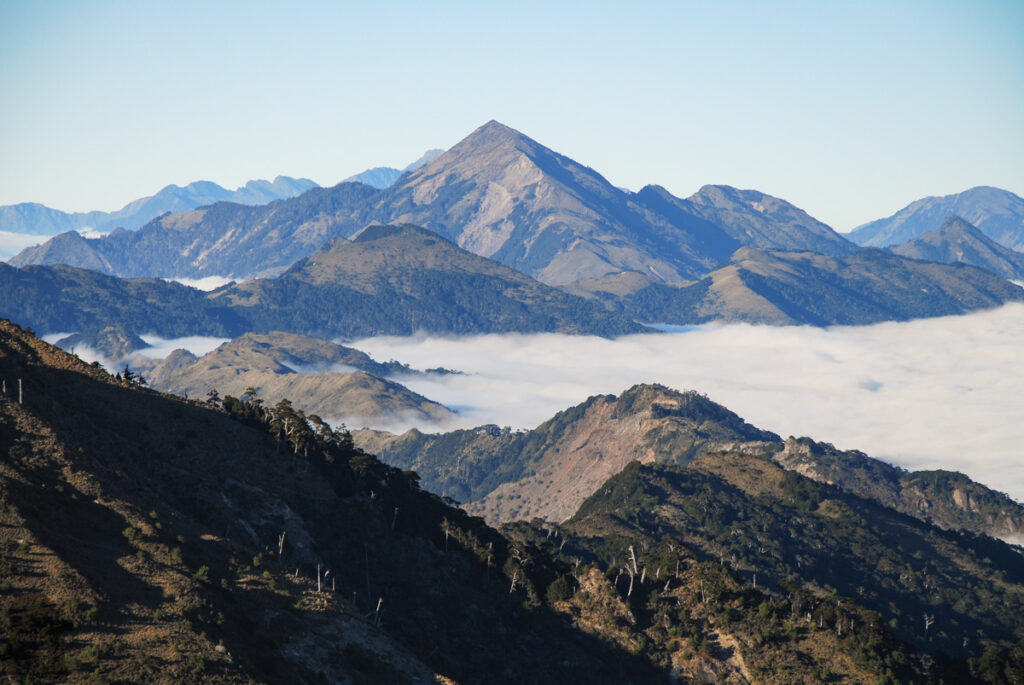
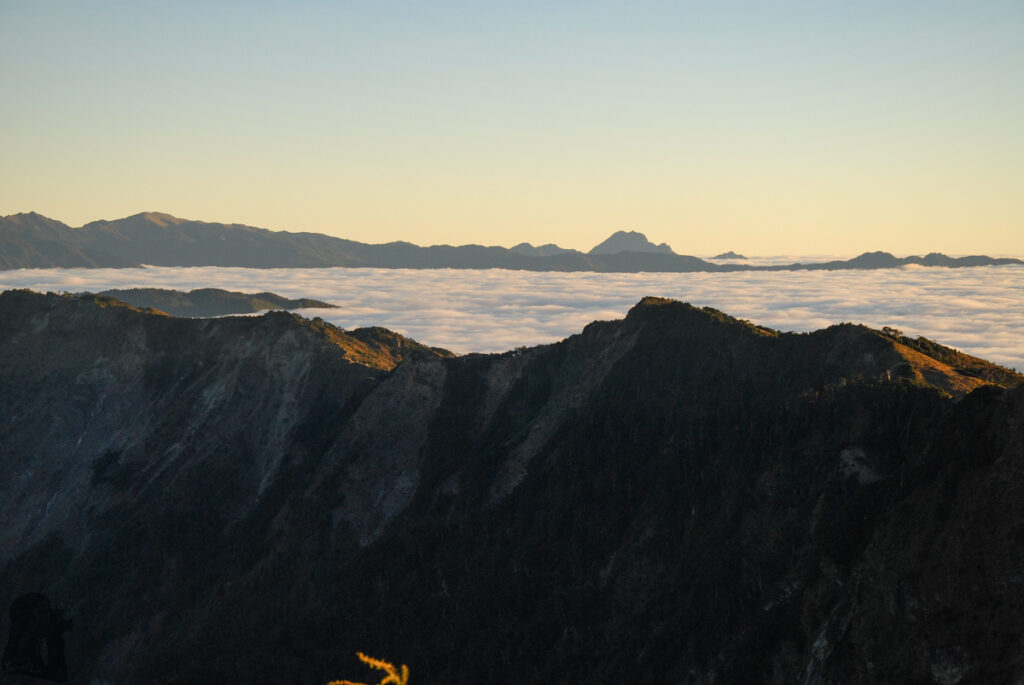
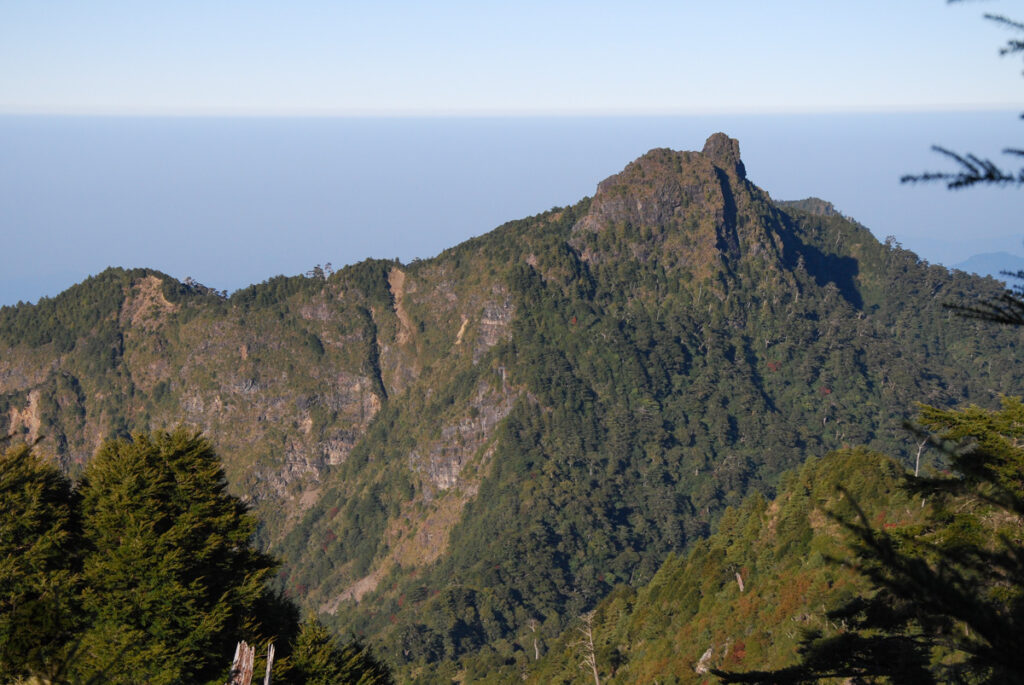
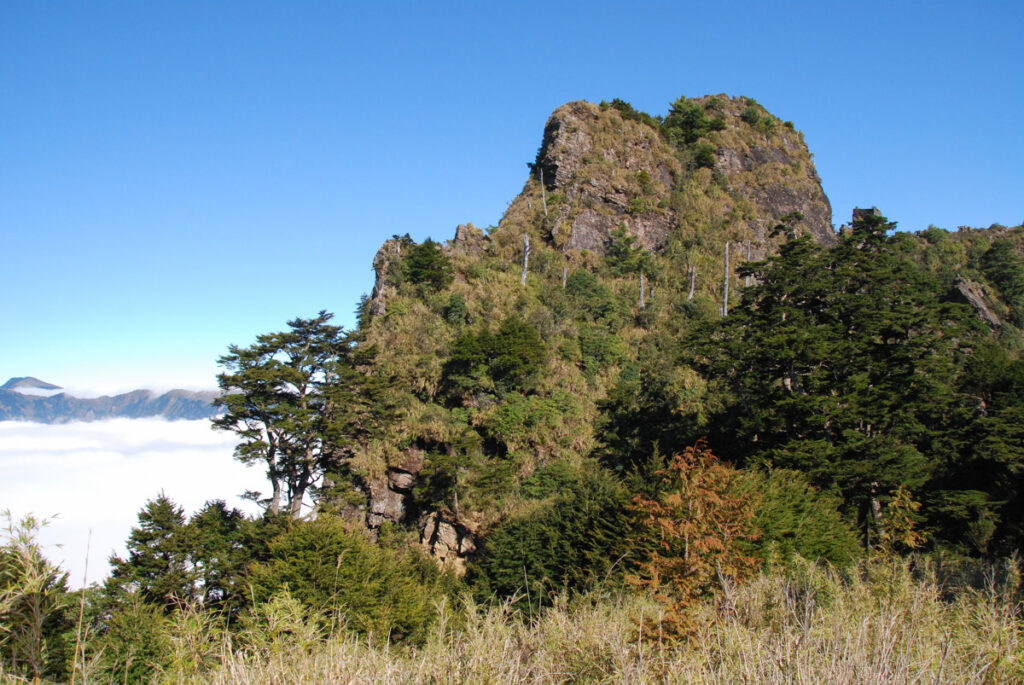
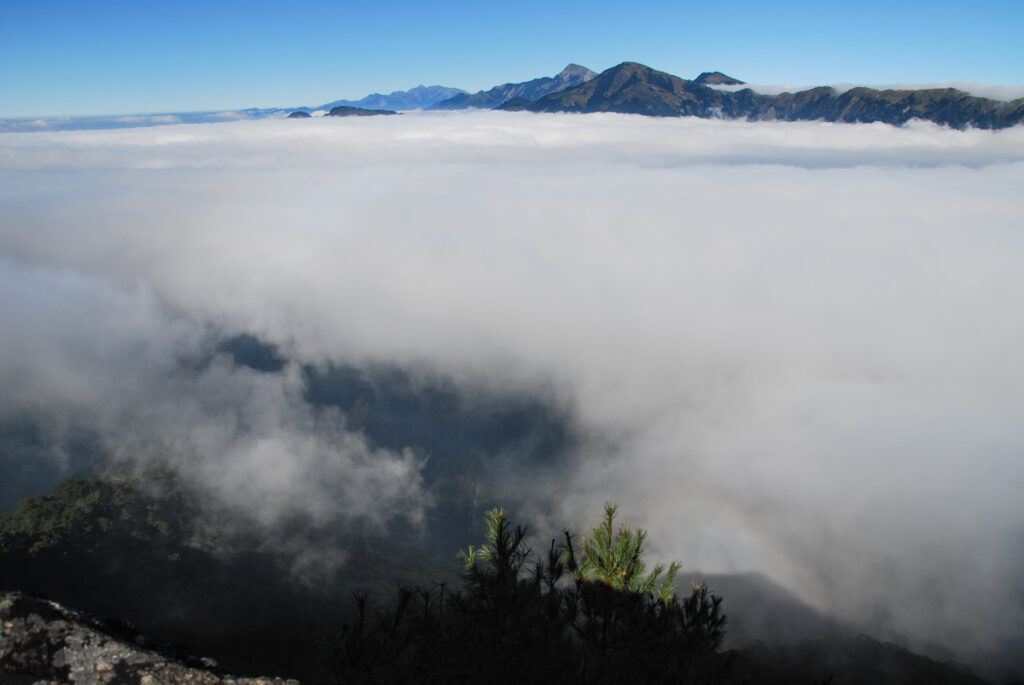
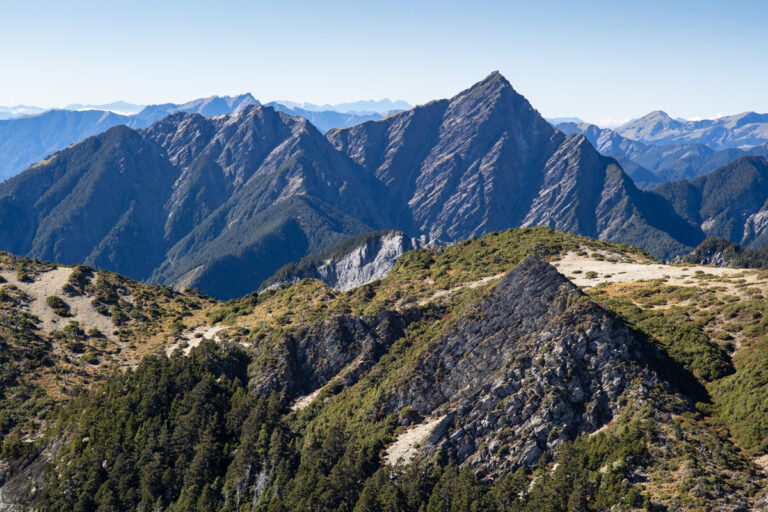
South Section 1, Central Mountain Range (南一段), is an alpine trail in southern Taiwan that traverses five Baiyue peaks which are to the north of the southernmost 3000er, Beidawushan (北大武山). The Highway 20 (南橫) is the boundary between South Section 1 and South Section 2 (南二段). (South Section 2, the trail includes the section to the Jiaming Lake (嘉明湖), is to the north of South Section 1.)
Hikers usually start the trip from the trail head at Jinjing Bridge (進逕橋) on the highway and move southward until Beinanzhushan (卑南主山). The route then turns to northwest, passing Shishan (石山) and Xinanshan (溪南山), and finally descends to Shishan Forest Road (石山林道) where the Tengzhi Research Center (藤枝研究中心; 原特生中心) is located.
In comparison to Beidawushan or South Section 2, this hike is generally considered much more difficult and subject to greater uncertainty, particularly after leaving Guanshan (關山), the south boundary of Yushan National Park.
Difficult Transportation
The transportation to arrive either the trail head of South Section 1 is tricky and expensive as there is no option for public transportation or own vehicle. The Jinjing Bridge is within the restrictive section of Highway 20 where the strict traffic control only allows visitors to pass in a few time frames each week.
This highway is also prone to landslide and flooding and therefore may be closed from time to time. Hikers need to arrange shuttles to drop them off at the trail head rather than parking the cars along the road.
The transportation service to get hikers in or out of Shishan Forest Road is run by the locals exclusively (to the best of my knowledge) and hikers may (or may not) be picked up at the Research Center depending on the road condition or other reasons.
Anyway it appears no easy or cheaper way to start or finish this hike in the near future. That is the top reason to put me off doing this hike again. Even there was a lot of unforgettable memory from this trip over 14 years ago.
The adventure
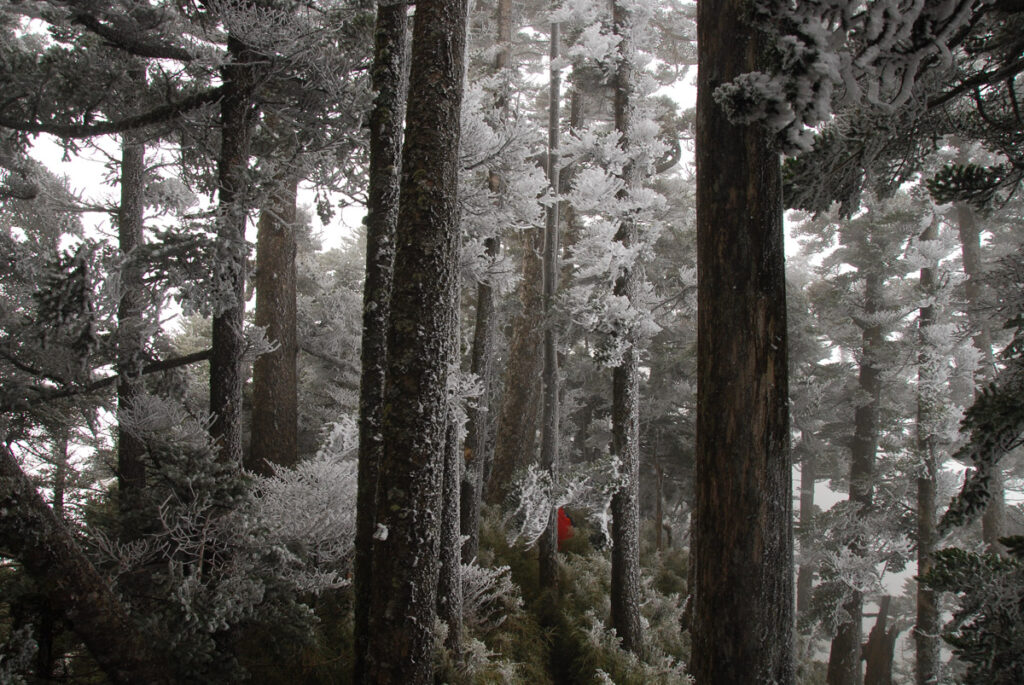
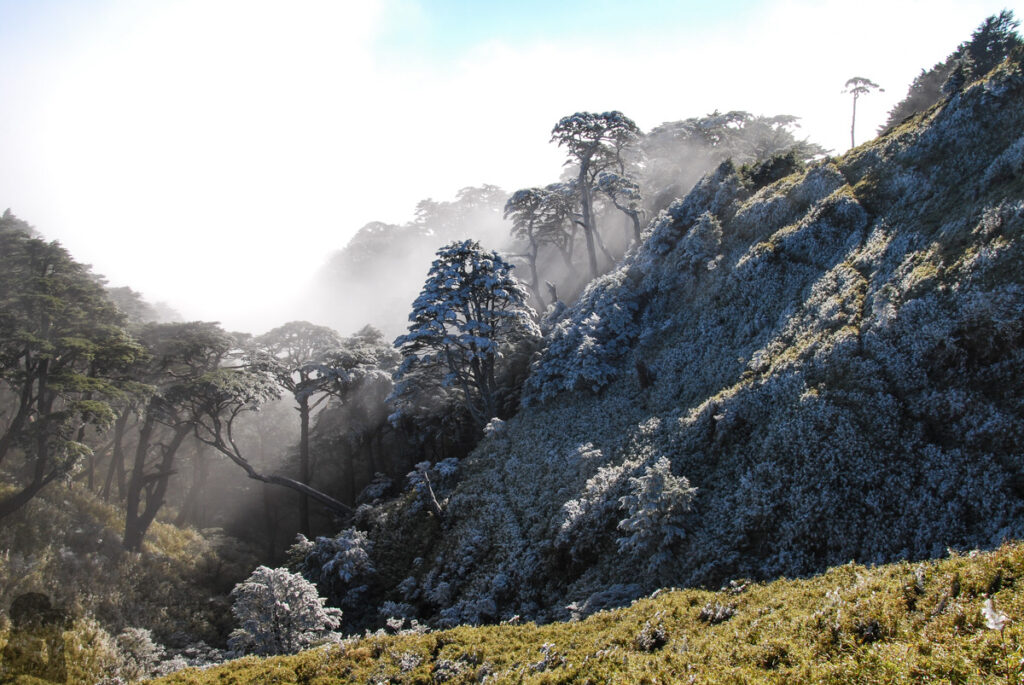
I joined a guided hike in the winter of that year. I already knew the hike wound not be easy well beforehand, especially the problem of water shortage and thorny Taiwan junipers (刺柏). (That was the only hike I wore leg sleeves under the trousers.)
But I did not expect the ride to the trail head was already an adventure. It was well before the dawn, our team in two vans took a secret path, a route probably did not exist on any maps and only were known to the locals and those bold drivers, to approach the highway. The road was narrow and extremely bumpy that the trees kept sweeping across the windscreen. I even doubted if our drivers could see exactly what was in the front.
Eventually our vans climbed to the silent and dark highway. Just when everyone was exhilarated we smelled something burned. Yes, it was our van’s wiring! Without the headlights our van was still moving forward on the highway awkwardly with the aid of a teammate’s headlamp held up by a hand outside the window. Having no third vehicle on the road we all arrived the trail head safe and sound when the day was brighter.
It was actually not too bad on the following days but there were several dramas that were worthy of mention.
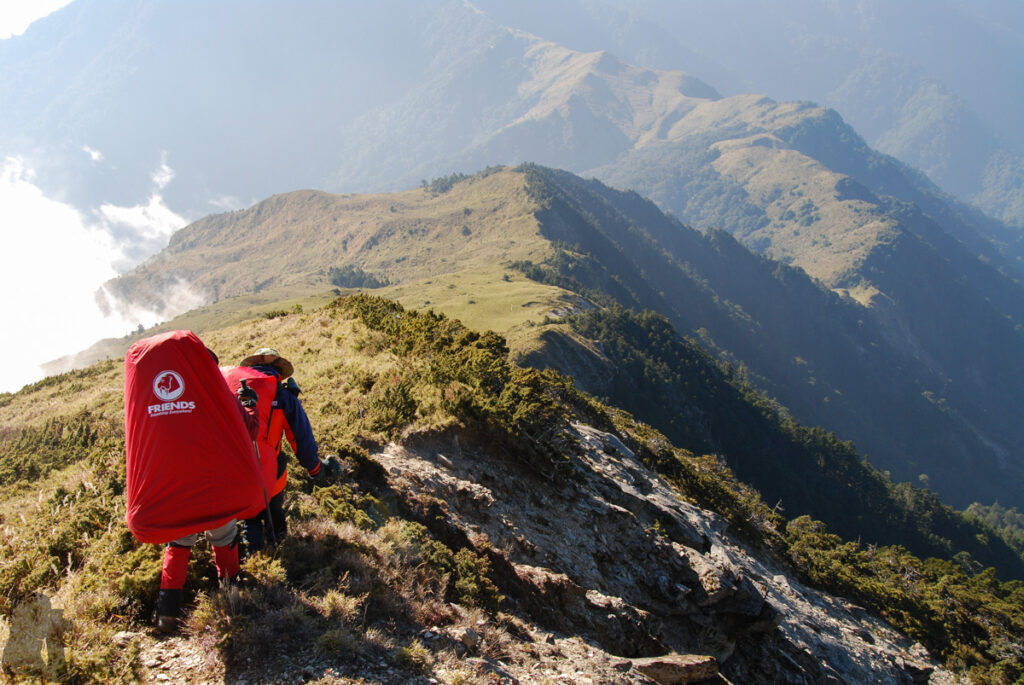
This was the first hike when I started to notice the importance of light-weight backpacking. The sight of a pressure cooker brought by our guide was astonishing, which he claimed as a secret weapon for steaming rice to perfection. I believed that this extra weight was a breeze to him, but on the other hand the couple in the team did suffer badly from their heavy backpacks.
The husband carried a backpack weighed 18 kg while his wife’s one was 30 kg, probably from sharing her husband’s supplies. This was unusually heavy for an ordinary hiker on a 6-day hike. The weight soon took its toll since the first day. We all took a part to reduce the burden on her; so they did not trail behind too much.
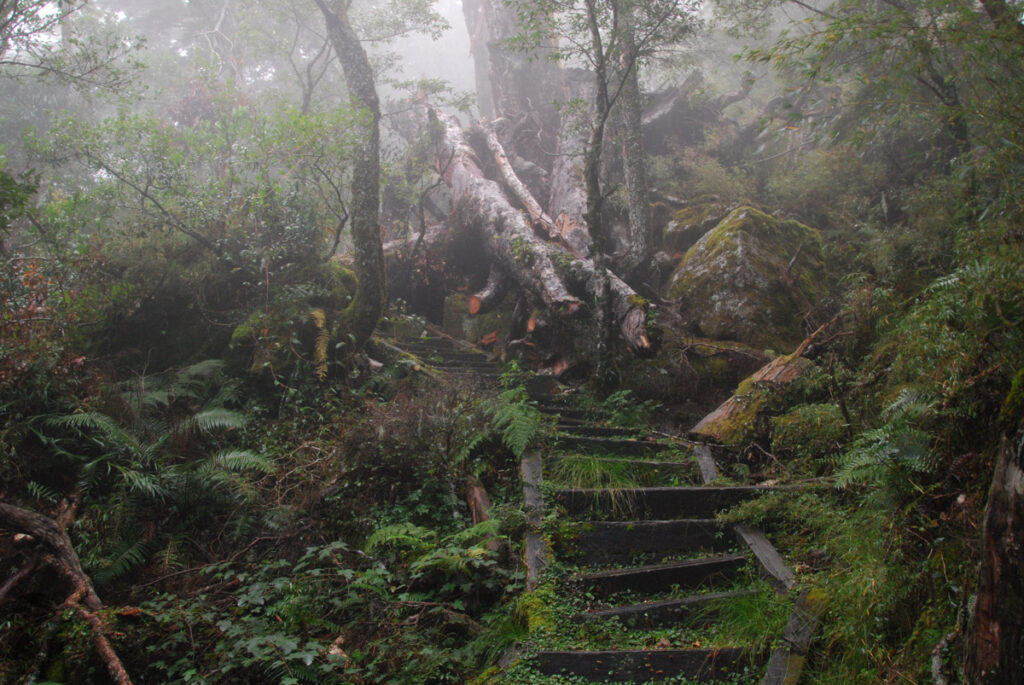
In an afternoon three of us went down to a creek in the bamboo jungle to take some water; dense arrow bamboo is well-known in Taiwan to confuse the sense of direction while hikers are surrounded by them. And that happened to us. When we tried to return to the campsite, the paths and gaps between tall shafts of bamboo all looked similar and random. On top of that, we could not see any trail marker.
A mate used a Garmin device to point out the direction, a straight line back to the tent, and then we have to force ourselves pushing through layers and layers of bamboos until we were finally out of the bamboo hell. That nasty bamboo jungle also took away our guide’s headlamp when he walked down to the creek. I saw it was hanging on a branch but I thought that headlamp was left there for a purpose… (he still had a spare headlamp for the rest of the trip; he told me he always carried spare gears for hiking, probably not a good practice for lightweight backpacking.)
Since this lesson plus the disgraceful one I had on North Section 2 (losing my way after relieving myself in the bamboo bush), my navigation device was with me all the time. This precaution became so important because I usually hiked solo in recent years.
The following days on the trip was fine but might be hard to others; One person got diarrhea unfortunately which stopped him quite a few times a day; a teammate became grumpy due to exhaustion; And a lady crushed her carbon-fiber hiking pole as she was tripped over.
In the evening before the final day we decided to camp at the abandoned forest road where no water sources was available, not our planned location due to the slow pace. The only “fluid” we could find was shallow muddy water in a pothole on the road. Back then hikers rarely used water filters. Out of survival instinct we still fetched the water reluctantly and let it flow through a headsox in the hope of removing some dirt. After boiling that brown water, it actually tasted alright; odd smell was masked by the seasoning for the rice, and in my water bottle the electrolyte neutralized the color and dirt taste.
On the last day we were so eager to finish the trip that many of us moved like desperadoes who just robbed a bank. We even missed (or intentionally ignored) a spot where we were supposed to rest and wait. Once we sped up for the final few kilometers on the road, the team split into the leading and trailing groups. I still remember when the trailing grumpy guy finally caught up, he could not help yelling to us: “You Should Stop!” But I believed he was glad as he made it like us.